ORGANS OF PARIS © 2026 Vincent Hildebrandt HOME ALL ORGANS



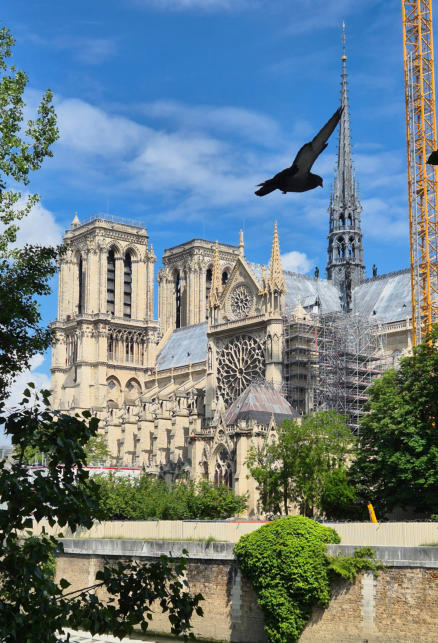
This masterpiece of early-Gotic architecture was built
between 1163-1345, replacing a Merovingian
Cathedral, St. Stephen. During the reigns of Louis XIV
and Louis XV, the cathedral was much altered, as
Gothic style was considered outdated. During the
revolution, many of the treasures of the cathedral were
destroyed. The cathedral's organ and great bell
Emmanuel (15 th century) managed to avoid being
destructed.
The badly damaged cathedral was restored in 1845-
1870 by Lassus and Eugène Viollet-le-Duc. In fact, quite
a few parts of the present cathedral do originate from
the 19th century! From 1991 onwards, a major
program of maintenance and restoration has been
carried out. In the future, new and comprehensive
restoration works have to be carried out. Both its
exterior and its interior are overwhelming - a
maginifcent housing for its organ!
The devastating fire of April 15, 2019 severely damaged
the building. In 2020, it was decided to rebuild the
destroyed or severely damaged parts identically. Notre-
Dame is scheduled to reopen to the public on
December 8, 2024.

Maurice Duruflé:
... placed an a dais situated in the middle of a spacious
organ loft with thé immense nave of the cathedral in het
organist's view. Like a ship's captain on the bridge, he
takes in the great open sea. It is an absolutely
intoxicating experience.
(L'Orgue, no 162, april-june 1977)
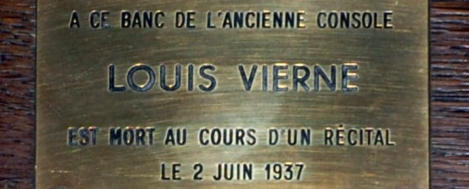
Louis Vierne:
At Notre Dame, with the console about seven feet out
from the case, the player hears the sound directly and in
all its power. It is a joy seldom experienced elsewhere.



1402 - Frederic Schambantz (1)
1415 - Jean Chahancel (6)
1458 - Jean Bourdon (6)
1473 - Jean Robelin (5)
1540 - Pasquier Bauldry (6)
1564 : Nicolas Dabenei (6)
1609/1620 - Valeran de Hewn (2)
1636/1646 - Pierre Thierry (5)
1672 - Jacques Carouge (2)
1691 - Alexandre Thierry, Hippolyie Ducastel (6)
1699 - Jean Bessart (6)
1733 - Francois Thierry (3)1788 - Francois-Henri Clicquot (3b)
1812 - Pierre-Francois Dallery (6)
1833 : Louis-Paul Dallery (6)
1868 et 1894 - Aristide Cavaille-Coll (3)1904 - Charles Mutin (5)
1932 - Société Cavaille-Coll, Joseph Beuchet (6)
1963/1966 - Jean Hermann & Robert Boisseau (3a)
1975 - Jean-Loup Boisseau (6)
1992 - Boisseau, Cattiaux, Emeriau, Giroud,
Societe Synaptel (3)
2014 - Bertrand Cattiaux, Pascal Quoirin (2)
2024 - Cattiaux-Chevron, Quoirin, Sarelot (5)
V/131/117 - transmission électrique/numériques
Composition
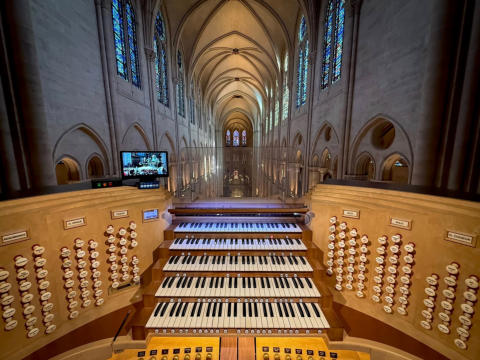
La console
Organistes titulaires
Olivier Latry, Vincent Dubois et Thierry Escaich
Titular organist adjoint :
Thibault Fajoles
Titular organist of the choir organ
Yves Castagnet
Organistes titulaires émérites:
Jean-Pierre Leguay et Philippe Lefebvre
Famous organists in the past :
Louis-Claude Daquin, Claude-Bénigne Balbastre, Nicolas
Séjan, Jean-Jacques Beauvarlet Charpentier, Louis
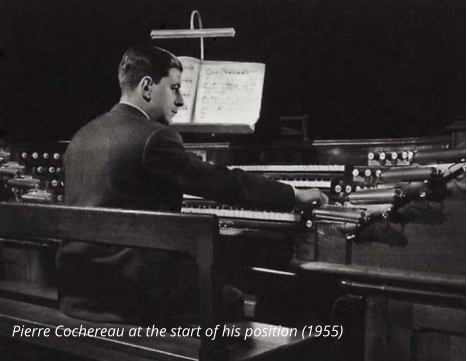
Vierne, Léonce de Saint-Martin, Pierre Cochereau.
Maesses with grand-orgue
Saturday 6 PM, Sunday 10 AM, 11:30 AM, 6 PM
Sunday vespers 5:15 PM, Mass 6 PM
Audition
Sunday, 4 PM
Concerts
Tuesday, 8:30 PM
Videos
Olivier Latry
Vincent Dubois
Johan Vexo
Philippe Lefebvre
Jean-Pierre Leguay
Pierre Moreau
Léonce de Saint-Martin
Audio
Léonce de Saint-Martin Interview
Video of the tribune and the console
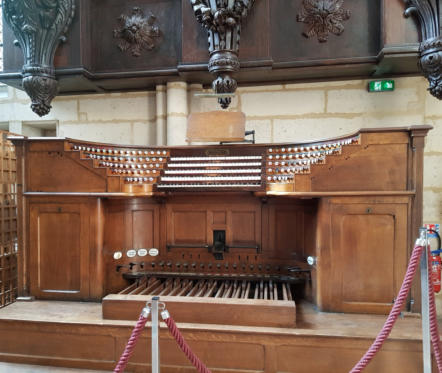
Photos Case: Vincent Hildebrandt Console: Victor Weller
E6
The first organ was mentioned as early as 1357. In 1403, a
new one was built. Up to 1730, it went through lots of
changes and expansions.
1730-1733
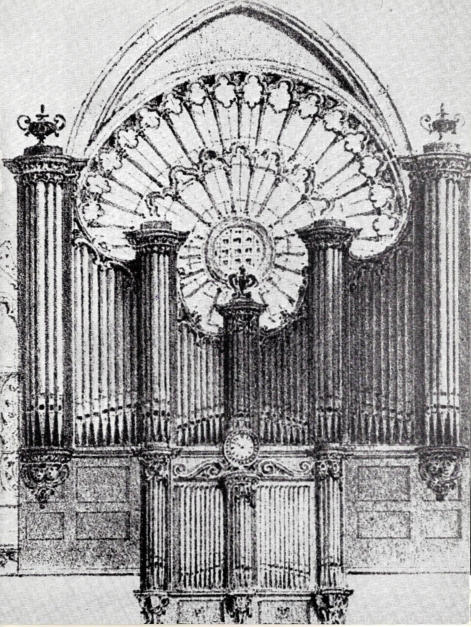
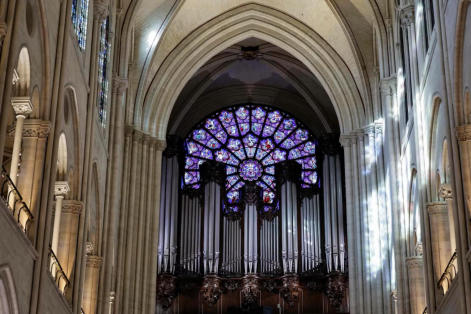
The current organ was built by François Thierry between 1730
and 1733. It reused some parts from the old organ: the back
positive case and its pipes, a few other pipes, and some
medieval framework elements. He created a new 24-foot
display case (just the great division, the current case) and a
new instrument with 47 stops across 5 manuals and pedal. A
wrought-iron balustrade with gold leaf ornaments was added
to enclose the gallery. The organ was powered by twelve
bellows operated by four men.
1783-1788
François-Henri Clicquot renovated and enlarged it. The back
positive case was rebuilt by sculptor Caillou. The metal pipes
of the Positive and Great were recast. New stops were added
to the Positive and Bombarde, and the Echo division was
redesigned. The great division case from Thierry was
deepened.
1812
Overhauled by Pierre-François Dallery. Revoicing of the
principals and some pipe swaps between stops.
1833
Overhauled by Louis-Paul Dallery. A new wind supply was
installed, but it didn't work out well.
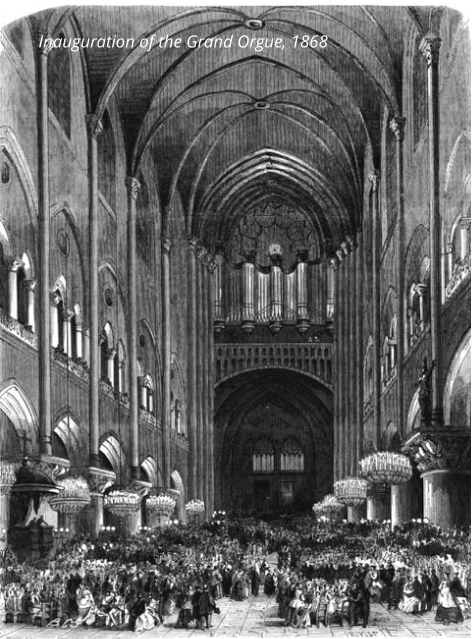
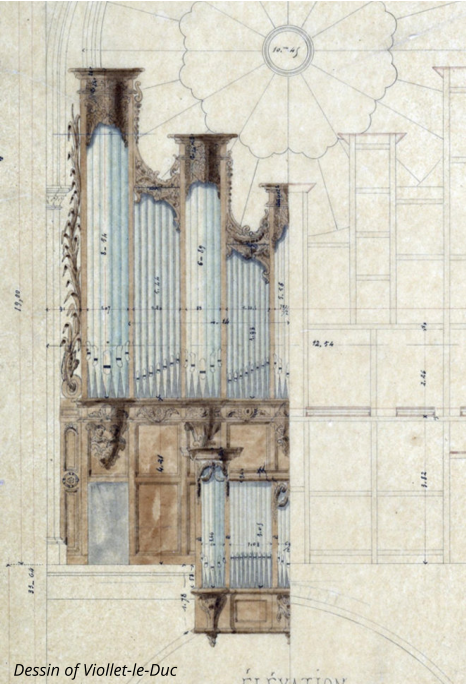
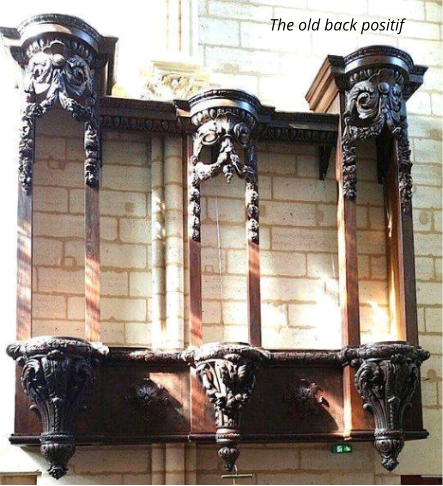
1864-1868
During the cathedral restoration, Viollet-le-Duc had the back
Positive removed (it's still stored in the south tower), and
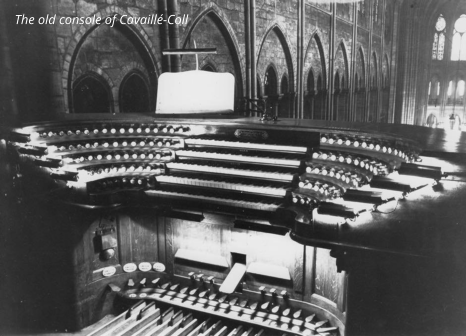
Aristide Cavaillé-Coll turned the Clicquot organ into a
symphonic one. Cavaillé-Coll reused about 30 old stops and
designed a new setup with 86 stops across 5 manuals and
pedal. He replaced the window console with an independent,
reversed one and added Barker machines for the actions.
1904
Overhauled by Charles Mutin.
•
Several stop changes and additions.
•
Replaced acoustic reed pipes with full-length ones.
1932
Overhauled by Joseph Beuchet.
•
Keyboard order changed for better playability.
•
New stops added to Pedal, Grand Chœur, and Récit.
•
Work on the mixtures.
•
Brakes added to the front Montre.
1959-1966
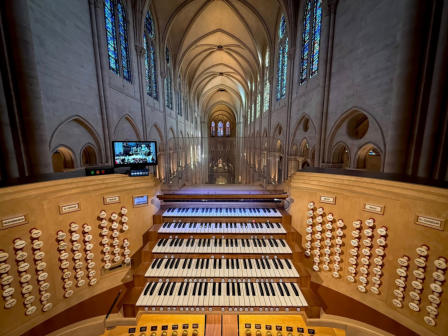
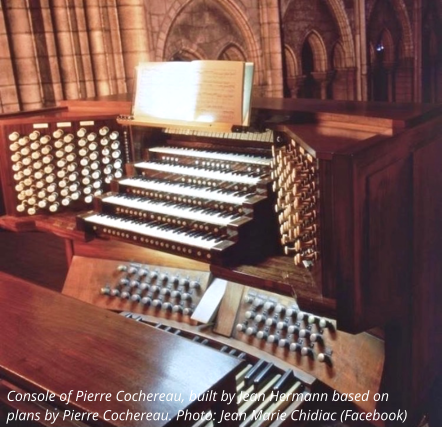
At Pierre Cochereau's initiative, Jean Hermann (and later
Robert Boisseau after Hermann's death in 1964) electrified
and revoiced it, stripping away its symphonic character.
•
Electrified key and stop actions.
•
New console installed.
•
11 new stops added to the Petit Pédale.
•
All mixtures redesigned around a 32' plenum.
•
Chamades added on top of the case.
•
Grand-Chœur reeds revoiced in a neo-classical style.
•
Small French Récit created.
•
Principals depavillonné, especially Clicquot's originals.
•
Wind pressures equalized.
1990-1992
A major restoration by Boisseau & Cattiaux, Emeriau, and
Giroud restored its 19th-century symphonic character while
keeping the 32' Grand Chœur classiques as rebuilt last
century.
•
Replaced electric action and combination system.
•
Revoiced several Cavaillé-Coll stops altered in the 1960s.
•
Repavillonné the principals.
•
Restored multiple wind pressures.
•
Restored harmonic mixtures.
•
Added a tierce to the cymbale.
•
Added a 2 2/3' quint and 8' clarinet (Cavaillé copies) to the
Récit.
•
Removed or redesigned 1960s/70s mixtures.
•
Added 8' trumpet and 4' clarion en chamade inspired by
St-Sernin.
2012-2014
A new restoration by Bertrand Cattiaux and Pascal Quoirin.
Work included:
New digital key action.
Fixed sagging pipes.
Full cleaning and overhaul.
Converted the "petite pédale" into a "résonnance" division.
High-pressure pneumatic motor registers replaced Cavaillé-
Coll's drawstops.
Video Montage en cours Rénovation orgue Notre-Dame
April 15, 2019
A very, very dark day in Paris, France, and the world's history:
Notre-Dame was badly damaged by a huge fire. Thanks to the
airtight, fireproof stone vault, the great organ was spared! The
pipes could have melted but were just filled with lead dust.
2019-2024
Windchests cleaned at Quoirin's workshop in Saint-Didier and
restored by Manufacture Languedocienne des Grandes
Orgues in Lodève (Hérault). Pipes, spared by the fire but
covered in soot and lead dust, fully renovated at Cattiaux-
Chevron in Liourdres, Corrèze. After restoration finished late
2022, reassembly in the west gallery started early 2023. In
2024, each of the 8,000 pipes (fully renovated by Cattiaux-
Chevron) was individually voiced and tuned.
The organ was inaugurated en belssed during the re-opening
of the cathédrale on Decembre 7, 2024.
The organ's pipework currently includes 33 pre-Revolution stops,
and about fifty from Cavaillé-Coll.










Organs of Paris


ORGANS OF PARIS © 2026 Vincent Hildebrandt
1402 - Frederic Schambantz (1)
1415 - Jean Chahancel (6)
1458 - Jean Bourdon (6)
1473 - Jean Robelin (5)
1540 - Pasquier Bauldry (6)
1564 : Nicolas Dabenei (6)
1609/1620 - Valeran de Hewn (2)
1636/1646 - Pierre Thierry (5)
1672 - Jacques Carouge (2)
1691 - Alexandre Thierry, Hippolyie Ducastel (6)
1699 - Jean Bessart (6)
1733 - Francois Thierry (3)1788 - Francois-Henri Clicquot (3b)
1812 - Pierre-Francois Dallery (6)
1833 : Louis-Paul Dallery (6)
1868 et 1894 - Aristide Cavaille-Coll (3)1904 - Charles Mutin (5)
1932 - Société Cavaille-Coll, Joseph Beuchet (6)
1963/1966 - Jean Hermann & Robert Boisseau (3a)
1975 - Jean-Loup Boisseau (6)
1992 - Boisseau, Cattiaux, Emeriau, Giroud,
Societe Synaptel (3)
2014 - Bertrand Cattiaux, Pascal Quoirin (2)
2024 - Cattiaux-Chevron, Quoirin, Sarelot (5)
V/131/117 - transmission électrique/numériques
Composition
La console
E6
The first organ was mentioned as early as 1357. In 1403, a
new one was built. Up to 1730, it went through lots of
changes and expansions.
1730-1733
The current organ was built by François Thierry between 1730
and 1733. It reused some parts from the old organ: the back
positive case and its pipes, a few other pipes, and some
medieval framework elements. He created a new 24-foot
display case (just the great division, the current case) and a
new instrument with 47 stops across 5 manuals and pedal. A
wrought-iron balustrade with gold leaf ornaments was added
to enclose the gallery. The organ was powered by twelve
bellows operated by four men.
1783-1788
François-Henri Clicquot renovated and enlarged it. The back
positive case was rebuilt by sculptor Caillou. The metal pipes
of the Positive and Great were recast. New stops were added
to the Positive and Bombarde, and the Echo division was
redesigned. The great division case from Thierry was
deepened.
1812
Overhauled by Pierre-François Dallery. Revoicing of the
principals and some pipe swaps between stops.
1833
Overhauled by Louis-Paul Dallery. A new wind supply was
installed, but it didn't work out well.
1864-1868
During the cathedral restoration, Viollet-le-Duc had the back
Positive removed (it's still stored in the south tower), and
Aristide Cavaillé-Coll turned the Clicquot organ into a
symphonic one. Cavaillé-Coll reused about 30 old stops and
designed a new setup with 86 stops across 5 manuals and
pedal. He replaced the window console with an independent,
reversed one and added Barker machines for the actions.
1904
Overhauled by Charles Mutin.
•
Several stop changes and additions.
•
Replaced acoustic reed pipes with full-length ones.
1932
Overhauled by Joseph Beuchet.
•
Keyboard order changed for better playability.
•
New stops added to Pedal, Grand Chœur, and Récit.
•
Work on the mixtures.
•
Brakes added to the front Montre.
1959-1966
At Pierre Cochereau's initiative, Jean Hermann (and later
Robert Boisseau after Hermann's death in 1964) electrified
and revoiced it, stripping away its symphonic character.
•
Electrified key and stop actions.
•
New console installed.
•
11 new stops added to the Petit Pédale.
•
All mixtures redesigned around a 32' plenum.
•
Chamades added on top of the case.
•
Grand-Chœur reeds revoiced in a neo-classical style.
•
Small French Récit created.
•
Principals depavillonné, especially Clicquot's originals.
•
Wind pressures equalized.
1990-1992
A major restoration by Boisseau & Cattiaux, Emeriau, and
Giroud restored its 19th-century symphonic character while
keeping the 32' Grand Chœur classiques as rebuilt last
century.
•
Replaced electric action and combination system.
•
Revoiced several Cavaillé-Coll stops altered in the 1960s.
•
Repavillonné the principals.
•
Restored multiple wind pressures.
•
Restored harmonic mixtures.
•
Added a tierce to the cymbale.
•
Added a 2 2/3' quint and 8' clarinet (Cavaillé copies) to the
Récit.
•
Removed or redesigned 1960s/70s mixtures.
•
Added 8' trumpet and 4' clarion en chamade inspired by
St-Sernin.
2012-2014
A new restoration by Bertrand Cattiaux and Pascal Quoirin.
Work included:
New digital key action.
Fixed sagging pipes.
Full cleaning and overhaul.
Converted the "petite pédale" into a "résonnance" division.
High-pressure pneumatic motor registers replaced Cavaillé-
Coll's drawstops.
Video Montage en cours Rénovation orgue Notre-Dame
April 15, 2019
A very, very dark day in Paris, France, and the world's history:
Notre-Dame was badly damaged by a huge fire. Thanks to the
airtight, fireproof stone vault, the great organ was spared! The
pipes could have melted but were just filled with lead dust.
2019-2024
Windchests cleaned at Quoirin's workshop in Saint-Didier and
restored by Manufacture Languedocienne des Grandes
Orgues in Lodève (Hérault). Pipes, spared by the fire but
covered in soot and lead dust, fully renovated at Cattiaux-
Chevron in Liourdres, Corrèze. After restoration finished late
2022, reassembly in the west gallery started early 2023. In
2024, each of the 8,000 pipes (fully renovated by Cattiaux-
Chevron) was individually voiced and tuned.
The organ was inaugurated en belssed during the re-opening
of the cathédrale on Decembre 7, 2024.
The organ's pipework currently includes 33 pre-Revolution stops,
and about fifty from Cavaillé-Coll.